
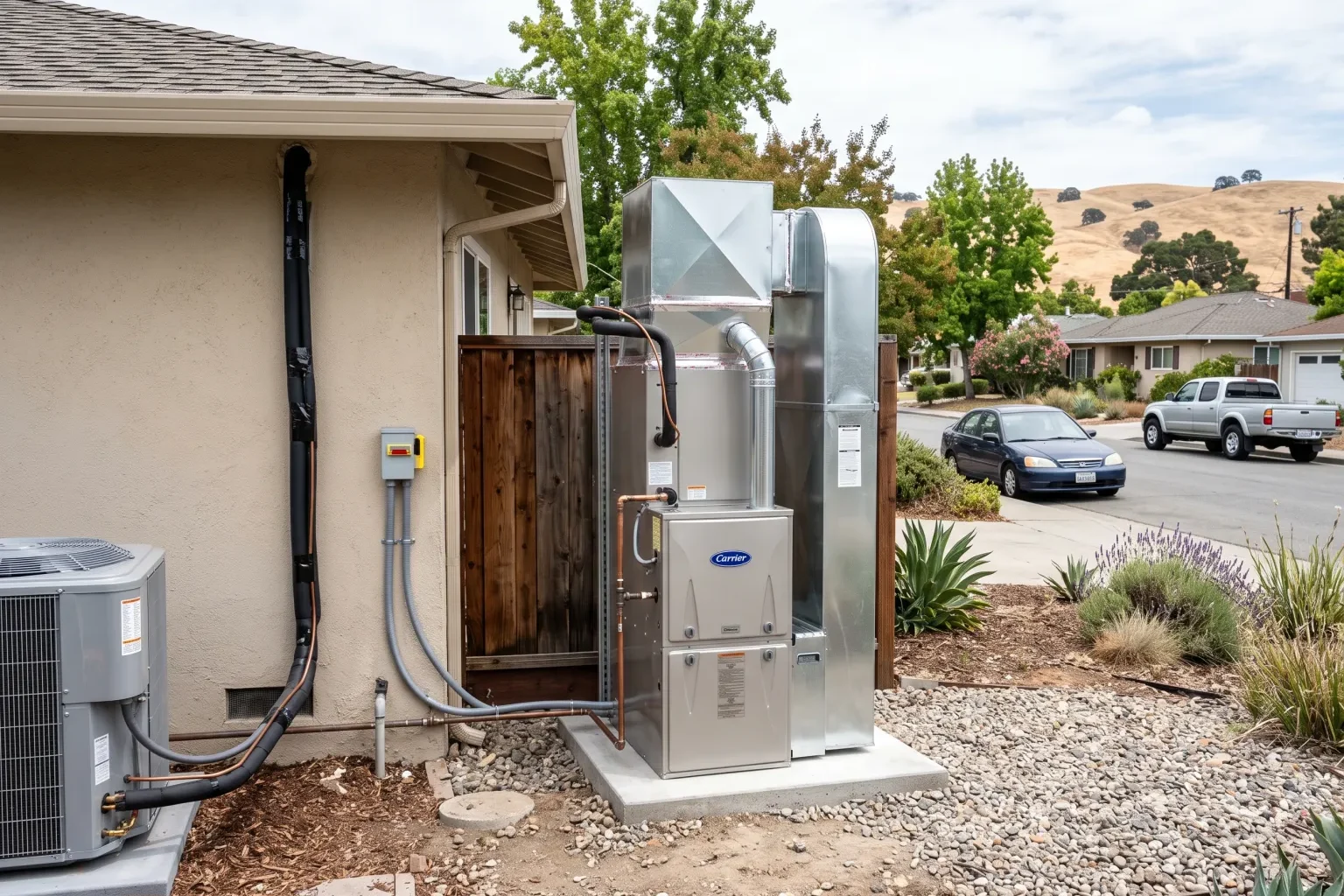
The short answer
If your heating system is blowing cool air, cycling oddly, making new noises, or not turning on, a repair visit can usually find the cause and fix it the same day when parts are available. We explain what we find and lay out repair and replacement options so you can decide.
When your furnace or heat pump stops keeping up, you want a clear answer about what's wrong and what it will take to fix it. OzoneFlow Heating & Cooling repairs gas furnaces, heat pumps, and the controls and ductwork that connect them for homeowners in Fremont, Newark, Union City, Milpitas, and surrounding areas. This page covers the warning signs, what we look at during a repair visit, how we help you weigh repair against replacement, and what shapes the cost.
Signs Your Heating System Needs Repair
Most heating problems give some warning before a full breakdown. Catching them early often means a smaller repair and less time without heat.
- Air from the vents feels lukewarm or cool when the heat is on
- The system turns on and off in short bursts, or runs without stopping
- Some rooms stay cold while others are comfortable
- New noises such as banging, squealing, grinding, or rattling
- A burning or dusty smell that lasts beyond the first run of the season
- The thermostat doesn't respond or the system won't start at all
- A heat pump that stays iced over or switches to backup heat often
- Energy bills rising without a change in how you use the system
What We Check During a Repair Visit
We start with the symptom you describe and then check the parts of the system that commonly cause it. The goal is to find the actual cause, not just reset the system and leave.
- Thermostat settings, wiring, and power supply
- Air filter condition and airflow through the return and supply vents
- Igniter, flame sensor, burners, and gas pressure on furnaces
- Blower motor, capacitor, and belt or wheel condition
- Heat exchanger, inspected for visible cracks or corrosion
- Venting and flue connections
- Heat pump refrigerant levels, reversing valve, and defrost controls
- Safety switches, limit controls, and error codes on the control board
Repair or Replace: Weighing Your Options
Most heating problems are worth repairing. A failed igniter, weak capacitor, or dirty flame sensor is a routine fix. Replacement deserves a closer look when the system is older, needs a major part such as a heat exchanger or compressor, or has needed several repairs in a short period.
Local rules also factor in. Under Bay Area Air District rules, natural gas furnaces manufactured from 2029 must meet a zero-NOx emission standard, which in practice points homeowners toward heat pumps when a furnace is replaced after that date. These rules do not require you to replace working equipment; they apply only when an existing furnace fails or is replaced.
If you're considering a heat pump, the federal tax credit for qualifying heat pumps covered only systems placed in service before December 31, 2025, so it does not apply to new installations. BayREN and your local clean energy provider may offer current incentives. Those change by funding cycle, so we confirm what's available before including it in a quote.
What Affects the Cost of a Heating Repair
We give you a quote before starting any repair. Several factors shape that cost:
- The type of system: gas furnace, heat pump, or a combination
- Which part has failed and whether it is a common or specialty part
- How accessible the equipment is, such as an attic, crawlspace, or closet install
- Whether the problem involves ductwork, wiring, or venting beyond the unit itself
- The age and brand of the system, which affects parts availability
How a Heating Repair Visit Works
When you contact us, we ask what you're noticing and schedule a time for a technician to come out. On arrival, the technician talks with you about the symptoms, then inspects the system and runs it to see the problem directly.
Once the cause is found, we explain it in plain terms, show you what we found when possible, and give you your options with a quote. Nothing is repaired until you approve it. If the needed part is on the truck, we can usually finish the repair during the same visit. Afterward, we test the system through a full heating cycle to confirm it's working properly.