
The short answer
If your AC is blowing warm air, running constantly, short-cycling, leaking, or making new noises, it likely needs a repair visit. We find the cause, explain your options in plain terms, and give you the cost before any work begins.
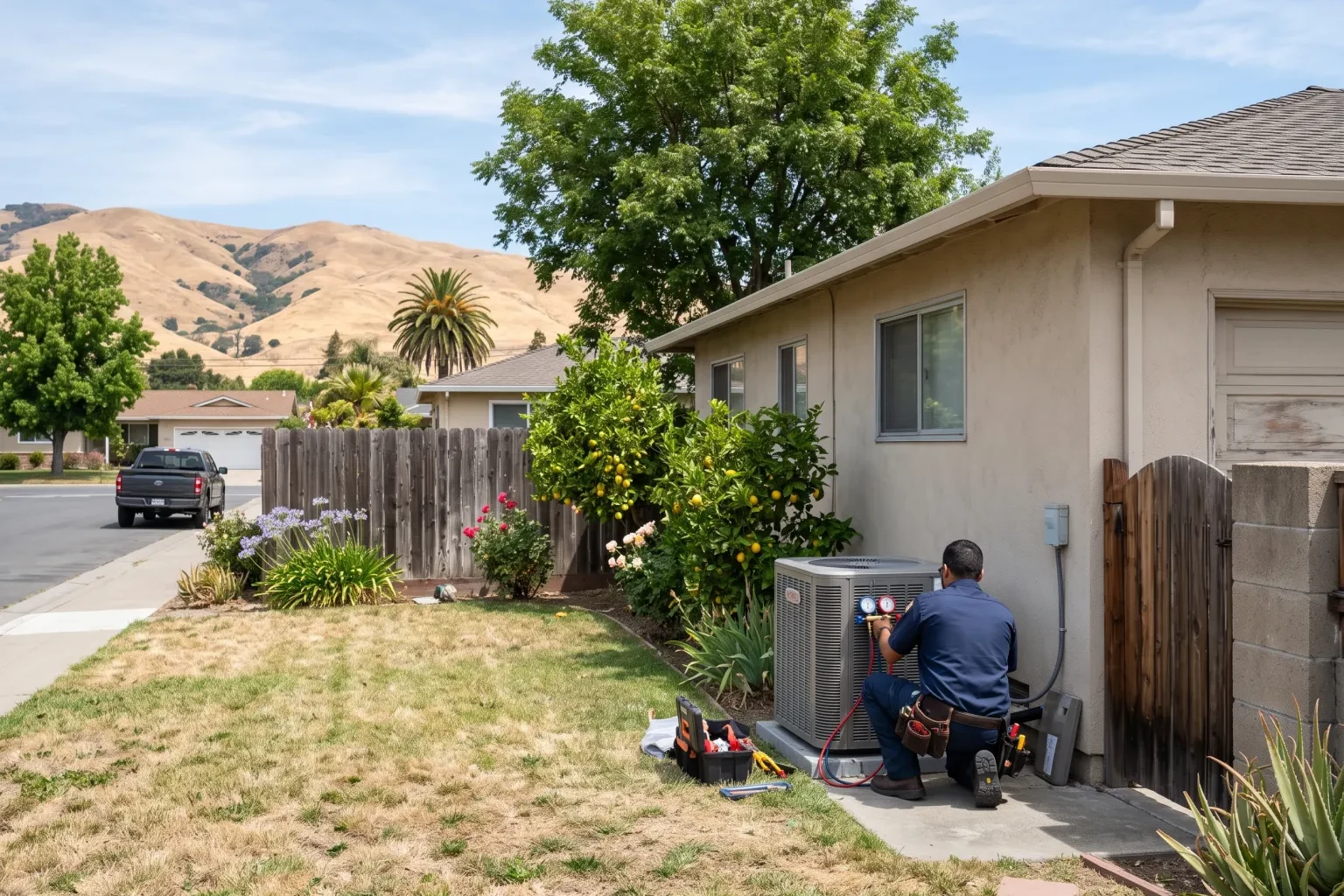
When your air conditioner stops cooling, short-cycles, or starts making noises it never used to, you want a clear answer about what's wrong and what it will take to fix it. OzoneFlow Heating & Cooling repairs central air conditioners and heat pumps for homeowners in Fremont, Newark, Union City, Milpitas, and the surrounding area. This page covers the signs that point to a problem, what our technicians inspect, how we help you weigh repair against replacement, and what to expect during a visit.
Signs Your Air Conditioner Needs Repair
Most AC problems show up gradually before the system quits completely. Catching them early can keep a small repair from turning into a bigger one. Summers here are dry, and inland parts of the area run noticeably hotter than neighborhoods near the Bay, so a weak system often shows its problems on the first real heat wave.
- Air from the vents feels lukewarm or only slightly cool
- The system runs nonstop but the house never reaches the set temperature
- The unit turns on and off every few minutes (short-cycling)
- Buzzing, grinding, rattling, squealing, or clicking from the indoor or outdoor unit
- Water pooling near the indoor unit or ice on the refrigerant lines
- Some rooms are much warmer than others
- A sudden jump in your electric bill with no change in how you use the AC
- The outdoor unit doesn't start, or the breaker keeps tripping
What We Check During an AC Repair Visit
We don't guess. Our technician works through the system to find the actual cause of the problem, not just the symptom. Depending on what you're seeing, that usually includes:
- Thermostat settings, wiring, and power supply
- Air filter, blower motor, and airflow through the ducts
- Capacitors, contactors, and other electrical components
- Compressor and condenser fan operation
- Refrigerant pressures and signs of a leak
- Evaporator and condenser coils for dirt, damage, or ice
- Condensate drain line and pan for clogs or overflow
Repair or Replace: How We Help You Decide
Many AC problems, like a failed capacitor, a clogged drain line, or a worn fan motor, are straightforward repairs that get an otherwise healthy system running again. Other times the repair is major, the system is older, or it has needed frequent fixes. In those cases we'll lay out both options so you can compare them side by side.
If replacement makes sense, a heat pump is worth considering because it handles both cooling and heating. Bay Area Air District rules will require natural gas furnaces manufactured from 2029 onward to meet a zero-NOx standard, which in practice points toward heat pumps. Those rules don't require you to replace working equipment, though. Note that the federal tax credit for heat pumps applied only to systems placed in service before the end of 2025, so it isn't available for new installations. BayREN and local clean energy providers may offer incentives. Amounts change by funding cycle, so we confirm the current offer before including it in a quote.
What Affects the Cost of AC Repair
Every repair is different, and we give you the price before starting work. The main factors are:
- The part that failed and whether it's readily available
- How much labor the repair takes and how accessible the equipment is
- Whether a refrigerant leak needs to be located and fixed
- The type, size, and age of your system
- Whether more than one component needs attention
How an AC Repair Visit Works
When you contact us, we'll ask what the system is doing so the technician arrives prepared. On site, they'll listen to your description, inspect and test the equipment, and explain what they found in plain language. You'll get your options and the cost up front. Nothing is repaired until you approve it. Once the work is done, the technician tests the system to confirm it's cooling properly and answers any questions you have.