
The short answer
You likely need a new AC if your system is aging, needs frequent or major repairs, or can no longer keep your home comfortable. We inspect your home, ductwork, and electrical setup, then lay out repair and replacement options, including heat pumps, so you can choose with clear information.
A new air conditioner is a big decision. In Fremont it usually comes up when an older system starts struggling through warm afternoons, or when a repair estimate makes you wonder whether the money would be better spent on new equipment. This page covers when installation makes sense, what we look at before recommending a system, how repair compares with replacement, what drives the cost, and what happens during a visit.
Signs You May Need a New Air Conditioner
Most systems don't fail all at once. They give warning signs over a season or two. If you notice several of these, it's worth having the system evaluated before the next hot stretch.
- Rooms that never reach the thermostat setting on warm days
- Repairs that keep coming back, or a major part like the compressor failing
- Electric bills creeping up without a change in how you use the AC
- Loud grinding, rattling, or buzzing from the outdoor unit
- Short cycling, where the system turns on and off every few minutes
- An older system that uses a refrigerant that is being phased out and is harder to service
What We Check Before Recommending a System
The right size and type of system depends on your house, not just the label on your old unit. Climate matters too. Summers near the Bay tend to be milder than in inland and southern parts of the Santa Clara Valley, so homes a short drive apart can need different capacity.
- Cooling load, based on square footage, insulation, windows, and sun exposure
- Ductwork condition, sizing, and leaks
- Electrical panel capacity and the circuit serving the outdoor unit
- Furnace or air handler age and compatibility with new equipment
- Thermostat type and placement
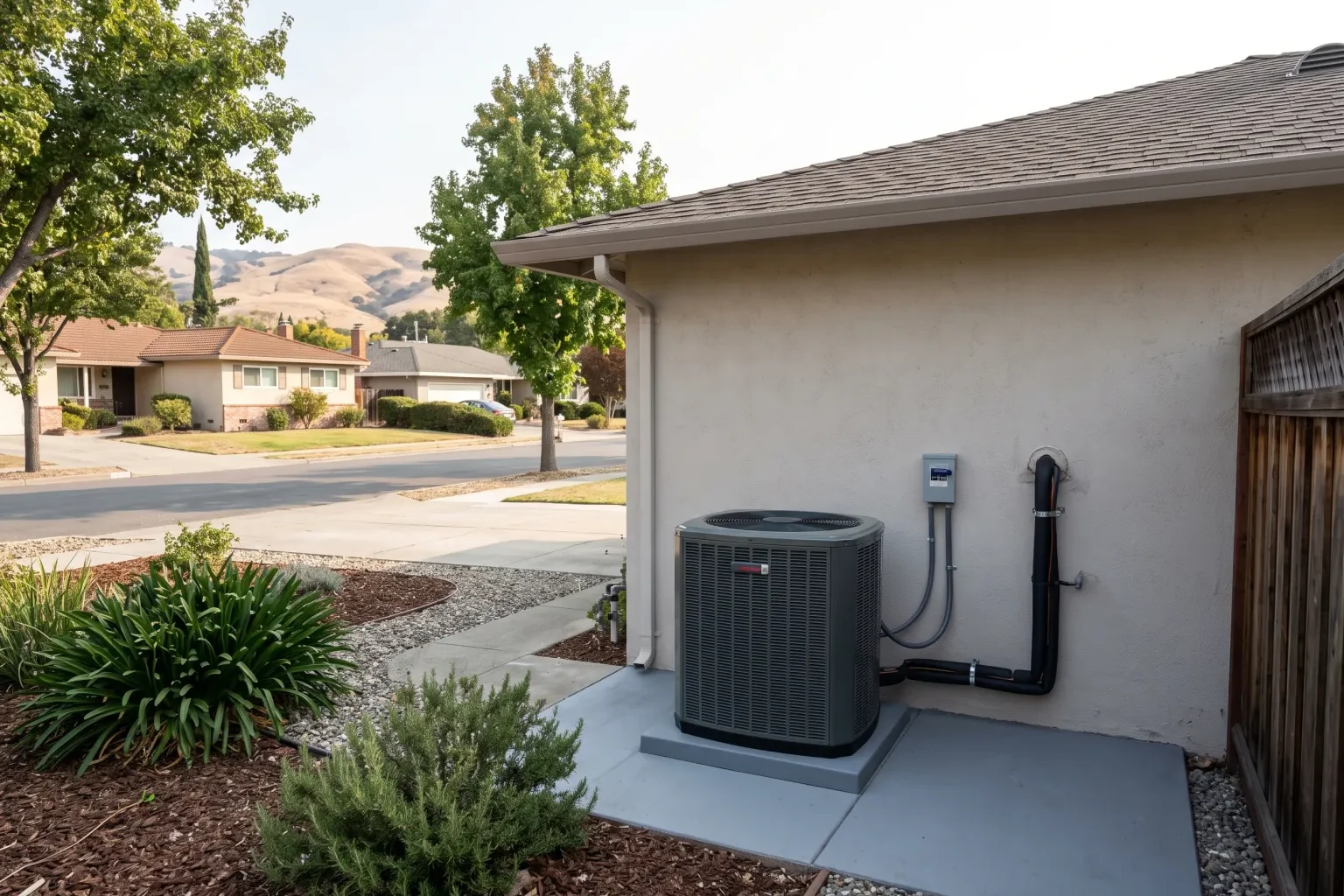
- Outdoor unit location, clearance, and drainage
Repair or Replace: Your Options
If the problem is a single worn part on a system that's otherwise in good shape, repair is often the sensible choice, and we'll say so. Replacement makes more sense when the system is near the end of its life, needs a major component, or costs more to run than it should.
When you do replace, there are a few paths: a new central AC paired with your existing furnace, a new AC and furnace together, or a heat pump that handles both heating and cooling. The heat pump option is worth considering if your furnace is also aging. Under Bay Area Air District rules, gas furnaces made from 2029 on must meet a zero-NOx standard, which in practice points toward heat pumps when a furnace is replaced after that date. Those rules don't require you to replace working equipment. They apply only when a furnace fails or is replaced.
What Affects the Cost
Every installation is quoted for the specific home, but these factors make the biggest difference.
- System type: central AC, heat pump, or ductless mini-split
- Capacity and efficiency rating of the equipment
- Whether ductwork needs repair, sealing, or replacement
- Electrical upgrades, such as panel or circuit work
- Whether the furnace or air handler is replaced at the same time
- Permits and access to the attic, crawlspace, or equipment location
How a Visit Works
We start with an in-home assessment, going through the checks above and asking how your home feels in different rooms and seasons. Then we go over your options in plain terms, including whether a repair would hold up, and give you a written quote.
On installation day, we protect your floors, remove the old equipment, install and connect the new system, and test airflow, refrigerant charge, and thermostat operation. Before we leave, we walk you through the controls and the basic upkeep, like changing filters.